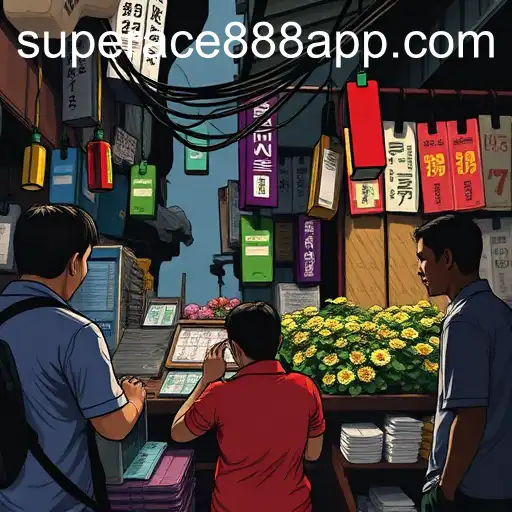
The Complexities of Jueteng: A Cultural and Societal Enigma
Jueteng, a popular yet illegal numbers game in the Philippines, has woven itself deeply into the cultural and social fabric of the nation. Its existence continues to spark debates around legality, societal impact, and economic implications. Despite its illicit status, the game has managed to survive various government attempts to eradicate it, demonstrating its entrenched position in Filipino society.
Understanding Jueteng: Origins and Mechanics
Jueteng's origins are often traced back to Chinese immigrants who introduced a form of numbers game in the Philippines. Over the decades, it has adapted to local customs, becoming a daily activity for many Filipinos. The game itself is relatively simple but highly alluring due to the potential for significant financial rewards. Participants choose a set of numbers, usually two digits, and place a small bet. If their numbers are drawn, they win a predetermined prize.
The allure of Jueteng is partly due to its accessibility. Unlike other forms of gambling, which might require players to travel to casinos or racetracks, Jueteng is played locally, often in urban and rural communities.
Jueteng's Economic Impact
Despite being illegal, Jueteng operations generate substantial economic activity, particularly in underprivileged areas where legitimate employment opportunities may be scarce. The funds generated from Jueteng bets often circulate within the local economy, providing a source of income for numerous individuals, including bet collectors (known as 'kubradores') and those in charge of drawing the winning numbers (referred to as 'cobradores').
The financial impact of Jueteng extends beyond small-scale economic cycles. It plays a controversial role at the national level, allegedly funding political campaigns and contributing to corruption within government ranks. The vast sums involved make it an essential point of discussion and concern for political leaders and law enforcement agencies aiming to reduce its influence.
The Digital Evolution: Emergence of Superace888
In recent years, with the rise of digital technology, traditional methods of gambling like Jueteng are slowly evolving. This changes the dynamic significantly, leading to the emergence of platforms such as Superace888. While not the same as Jueteng, Superace888 represents a modern shift towards online betting and gambling within the Philippines.
Superace888, a digital betting platform, offers a glimpse into how technology reshapes gambling norms in the region. Unlike physically-based Jueteng, Superace888 utilizes the internet to reach potential bettors, broadening its reach and accessibility.
Technological Influence on Traditional Gambling
The move towards digital has its pros and cons. On one hand, platforms like Superace888 offer convenience and anonymity. Users can engage in betting activities without physically being present at a location, reducing personal risk and increasing privacy. On the other hand, the digital transformation poses challenges in regulation and control, particularly concerning legal enforcement and the protection of vulnerable individuals.
The shift from Jueteng to online platforms underscores an essential dialogue on adapting regulations and policies to address rapidly evolving gambling landscapes. Traditional methods of controlling illegal gambling might not be effective in the digital landscape, prompting a need for innovative solutions to manage and monitor such activities.
The Societal Ramifications
Jueteng remains a double-edged sword for many communities in the Philippines. It provides quick, albeit illegal, economic relief for many, yet simultaneously perpetuates broader societal issues. The rise of online gambling platforms like Superace888 adds another layer of complexity, intertwining technology with traditional practices.
The societal ramifications are profound, with Jueteng often being linked to deep-seated issues such as poverty, corruption, and social inequality. The debate persists on whether to legalize and regulate gambling or continue with prohibition and enforcement strategies.
The Path Forward
The future of Jueteng, alongside emerging platforms like Superace888, raises pivotal questions for policymakers and society alike. Whether through legislation, regulation, or continued suppression, the path forward requires a nuanced understanding of its socio-economic impacts. With technology continuing to reshape traditional landscapes, ongoing dialogue and action are vital in determining the future of gambling in the Philippines.
Ultimately, understanding Jueteng and its digital offshoots such as Superace888 is crucial for addressing larger questions about legality, ethics, and economics within society. As both realms proceed toward inevitable evolution, careful consideration is imperative to balance cultural traditions with modern socio-economic realities.